
WELCOME BONUS 300%
UP TO €2000 + 100
FREE SPINS
UP TO €2000 + 100
FREE SPINS
Home → Games
Casino games at Amunracasino
Video Poker 9/6: What the Two Numbers Mean
The Video Poker Jacks or Better 9/6 variant specifies a Full Pay table where the notation indicates distinct payout multipliers for key hands. The first digit represents the Full House paying nine units, while the second denotes the Flush returning six units per coin wagered. This specific structure yields an RTP of 99.54% and a house edge of only 0.46% when optimal strategy is applied. Players must bet five coins to unlock the Royal Flush bonus of 4000 credits, which significantly impacts the expected value calculation.
The Deuces Wild Full Pay version offers a contrasting mathematical model with an RTP exceeding one hundred percent at 100.76%. This positive expected value arises because all four twos act as wild cards, allowing for rare combinations like Five of a Kind. The paytable pays eight hundred for a Natural Royal Flush and two hundred for Four Deuces, creating a favorable environment for skilled players. Any deviation from the optimal strategy quickly reduces this advantage, pushing the RTP below the break-even point for the participant.
Comparing these two variants reveals that the Jacks or Better game requires strict adherence to basic strategy to maintain its low house edge. The Deuces Wild title allows for a theoretical player advantage of 0.76%, making it unique among mass-market casino games. While the Jacks or Better standard deviation stands at 4.42, the volatility profile differs due to the wild card mechanics in Deuces Wild. Understanding these differences helps players select tables that align with their risk tolerance and bankroll management strategies.
Straight 35:1 Instead of 36:1: Where House Edge Originates
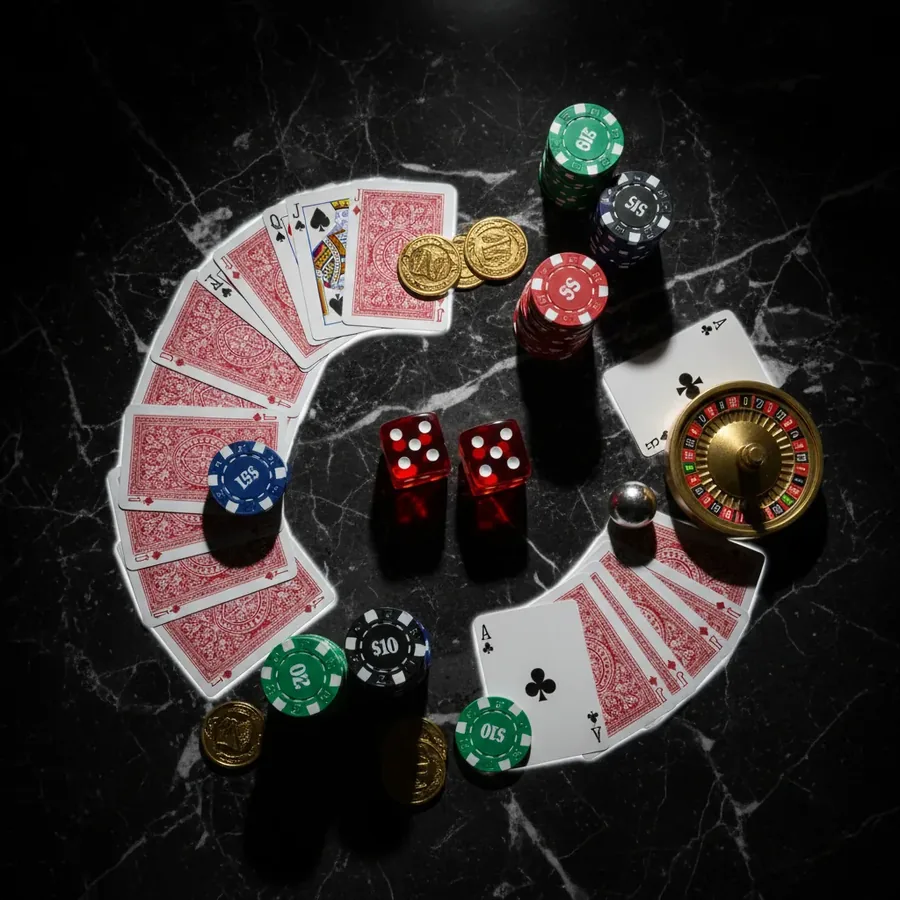
The European Roulette wheel contains thirty-seven sectors, ranging from numbers one to thirty-six plus a single zero pocket. A Straight bet on any single number pays out at odds of 35 to 1, rather than the true mathematical probability of 36 to 1. This discrepancy creates a constant house edge of 2.70% across all betting options on the table layout. The absence of a second zero ensures this edge remains lower than in American roulette variants found elsewhere.
In contrast, the French Roulette variant introduces the La Partage rule for even-money bets such as Red or Black. When the ball lands on zero, half of the stake on these outside bets is returned to the player immediately. This rule reduces the house edge on those specific wagers to 1.35%, matching the En Prison alternative. However, inside bets like Straights do not benefit from this protection and retain the full 2.70% disadvantage for the gambler.
The difference between paying 35 to 1 and the true 36 to 1 odds directly funds the casino's operational margin on each spin. For every euro wagered on a Straight bet, the house retains approximately 0.027 euros over the long term. This edge applies uniformly to Split, Street, Corner, and Dozen bets as well, ensuring consistent profitability for the establishment. Players accepting these terms must recognize that no betting system can overcome this built-in mathematical disadvantage over time.
Martingale Fails After 8 Rounds at Table Limit
The Martingale strategy involves doubling the bet after every loss to recover previous stakes with a single win. Starting with a base unit of ten euros, a losing streak of eight consecutive rounds requires a ninth bet of twelve hundred eighty euros. This exponential growth rapidly approaches typical maximum table limits, which often cap around fifteen hundred euros for standard games. Once the limit is reached, the player cannot double further and faces a substantial net loss that exceeds initial capital.
Blackjack Insurance provides a concrete example of why negative progression systems fail against negative expectation bets. The insurance side bet carries a house edge of 7.47% and an RTP of only 92.53% in six-to-eight deck games. Even if a player doubles their insurance stake after each loss, the high house edge ensures they lose money faster than on the main hand. The basic strategy advises always rejecting insurance unless counting cards show a true count greater than or equal to three.
Craps Pass Line bets offer a much lower house edge of 1.41%, yet the Martingale approach still poses significant risks due to variance. Standard deviation of 1.00 means losing streaks occur more frequently than casual players anticipate during short sessions. Applying a doubling sequence on a pass line bet eventually hits the table maximum before a winning roll resolves the deficit. The combined effect of table limits and statistical variance makes this strategy mathematically unsustainable for long-term bankroll preservation.
37 vs. 38 Sectors: What the Double Zero Costs
European Roulette features thirty-seven sectors, comprising numbers one through thirty-six and a single zero pocket. This configuration results in a house edge of 2.70% for all standard wagers placed on the felt. The presence of only one green zero minimizes the casino's advantage compared to wheels with additional pockets. Players betting on red or black face a slightly better probability of winning than on American layouts.
American Roulette adds a double zero sector, increasing the total wheel count to thirty-eight pockets. This additional green slot raises the house edge to approximately 5.26% on most bets, nearly doubling the cost of play. The extra zero alters the probability calculations for every wager type, including straights, splits, and corner bets. Consequently, the expected return decreases significantly, making European wheels the more favorable option for disciplined gamblers.
Sic Bo presents another comparison point with varying house edges depending on the specific side bet chosen. Specific Triple bets carry a house edge of 18.52%, while Single Number bets offer a much lower 7.87%. These figures demonstrate how different game structures impact player returns beyond simple wheel configurations. Understanding these variations helps players avoid high-edge propositions that drain bankrolls faster than standard table games.
The Baccarat Player Pair side bet illustrates how auxiliary wagers drastically increase the house advantage compared to main bets. This specific side bet holds a house edge of 10.36%, far exceeding the 1.24% edge on the standard Player bet. The payout of eleven to one seems attractive but fails to compensate for the reduced probability of pairing occurring. Smart players stick to main bets to minimize the mathematical disadvantage inherent in casino offerings.
When is Splitting Aces and Eights Sensible?
Splitting Aces in Blackjack allows players to separate two initial ace cards into two independent hands, each receiving one additional card. This move is universally recommended by basic strategy because starting with twenty points offers poor flexibility for drawing further cards. Resplitting Aces is often permitted, improving the overall RTP by 0.08 percentage points compared to non-resplit rules. The dealer hitting soft seventeen increases the house edge by 0.22 percentage points, making split aces even more valuable.
Pairing two eights provides a total of sixteen, which is statistically the weakest hard hand in blackjack. Standing on sixteen forces the player to lose whenever the dealer shows a seven through ace, resulting in frequent defeats. Splitting transforms this weak position into two hands starting with eight, offering better chances to improve to nineteen or twenty. Doubling after split rules can further enhance the expected value by allowing increased wagers on promising new hands.
Rule modifications significantly influence the decision to split pairs, particularly regarding the number of decks used. Playing with six decks instead of eight improves the house edge by approximately 0.02 percentage points for basic strategy players. Allowing double after split boosts the player's advantage by 0.14 percentage points, rewarding aggressive play on split hands. These subtle rule variations accumulate over thousands of hands, determining whether splitting becomes a profitable or costly endeavor.
Game categories at a glance
| Category | Examples | Stakes From | Highlight |
|---|---|---|---|
| Slots | Valley of the Gods, Mental, Midas Golden Touch | 0,10 EUR | thousands of titles |
| Table games | Roulette, Blackjack, Baccarat | 0,50 EUR | classic rules |
| Live casino | Auto Roulette Classic 1 Live, MONOPOLY Live | 0,20 EUR | real dealers |
| Jackpot games | Mega Moolah, Divine Fortune, Age of the Gods | 0,20 EUR | progressive pools |
| Instant games | Aviator, Plinko, Mines | 0,10 EUR | fast rounds |
| Video poker | Jacks or Better, Deuces Wild | 0,25 EUR | strategy based |
Columns and Dozens Pay 2:1 in Roulette
European Roulette utilizes a single-zero wheel with 37 sectors, resulting in a house edge of 2.70 percent across all bets. The payout structure for column and dozen wagers is set at 2:1, which mathematically aligns with the probability of hitting one of these sections. This standard ratio applies equally to low/high and odd/even outside bets on the layout.
French Roulette improves upon this baseline by introducing the La Partage rule for even-money outside bets. Under La Partage, the house edge drops to 1.35 percent because half of the stake is returned if the ball lands on zero. This reduction effectively halves the casino's advantage compared to the standard European version without altering the core 2:1 payout mechanics.
The financial consequence for players involves lower volatility when betting on columns or dozens due to higher hit frequencies. A straight bet pays 35:1 but carries the full 2.70 percent edge, whereas outside bets offer more frequent small returns. Players must note that La Partage applies only to specific even-money wagers and not to inside bets like straights or splits.
Minimum deposit 20 EUR, table games count 10 percent
The minimum deposit required to initiate an account transaction is set at 20 EUR, establishing the lowest entry threshold for funding. This amount serves as the base capital for wagering activities, including both slot games and live dealer tables. Any deposit below this limit will likely be rejected by the payment processing system.
Table games contribute only 10 percent toward the bonus turnover requirement, significantly limiting their utility for clearing promotional funds. In contrast, slots count 100 percent, meaning a 20 EUR wager on blackjack adds just 2 EUR to the required volume. This disparity forces players to use slots primarily for meeting the wagering conditions attached to deposits.
The 300 percent welcome bonus up to 2,000 EUR creates a substantial theoretical bankroll, but the low contribution rate restricts its practical value. To clear a bonus of 2,000 EUR with a standard multiplier, relying on table games would require massive turnover volumes. Players should calculate the effective cost of clearing bonuses using only high-contribution categories to avoid excessive risk.
Craps Odds Bet with 0 Percent House Edge
Craps offers a unique odds bet that carries a zero percent house edge, paying out according to true mathematical probabilities rather than casino margins. This side wager can only be placed after a point is established on the pass line or don't pass line. It is the only game mechanic in the portfolio that eliminates the statistical advantage for the house entirely.
The payout ratios for odds bets vary based on the specific point number established during the dice roll. Points of 4 or 10 pay 2:1, while points of 5 or 9 pay 3:2, and points of 6 or 8 pay 6:5. These exact quotients ensure that the expected value of the odds portion remains neutral over the long term.
Combining the odds bet with the initial pass line wager reduces the overall house edge of the combined action to 0.37 percent for 3-4-5x odds modes. While the pass line itself holds a 1.41 percent edge, the zero-edge odds portion dilutes this average significantly. This structure makes craps one of the most statistically favorable games for informed players seeking minimal variance.
Soft 17: the Ace counts 11 or 1
A soft hand in blackjack occurs when an Ace is counted as 11 without causing the total to exceed 21, such as an Ace and a 6. If the dealer hits on soft 17, they are forced to draw another card despite having a flexible total that could improve or bust. This rule variation directly impacts the strategic decisions available to the player regarding doubling down.
Allowing the dealer to hit soft 17 increases the house edge by approximately 0.22 percentage points compared to standing rules. This penalty arises because the dealer has more opportunities to improve their hand without risking an immediate bust. Consequently, the theoretical return to player decreases slightly under this specific rule configuration.
Players can mitigate this disadvantage by utilizing strategies that account for the dealer's soft 17 behavior, such as adjusting double-down frequencies. The ability to split aces and double after split further modifies the overall expectation, though not enough to fully offset the hit rule. Understanding this dynamic is crucial for maintaining optimal basic strategy adherence.
Double Down: Doubling Your Bet After Two Cards
Doubling down allows a player to double their initial wager after receiving the first two cards, in exchange for committing to receive exactly one more card. This aggressive move is typically reserved for situations where the player holds a strong total against a weak dealer upcard. The maximum bet becomes twice the original stake, amplifying both potential wins and losses.
In Blackjack Single Deck, doubling down is particularly powerful due to the reduced deck size affecting card distribution probabilities. The house edge for this variant stands at 0.15 percent, benefiting from the flexibility of doubling on any two cards. This rule interaction helps counteract the negative impact of other restrictions like resplitting limitations.
The strategic application of doubling down requires precise calculation of the remaining deck composition and dealer exposure. When executed correctly, it maximizes profit on favorable hands while minimizing exposure on weaker ones. Players must recognize that failing to double down in optimal scenarios results in a significant loss of expected value over time.
Keno and Bingo with RTP Between 92 and 95
Baccarat Player Pair side bets operate with a house edge of 10.36 percent, which directly reduces the theoretical return to player percentage down to 89.64 percent for those specific wagers. This mathematical disadvantage is significantly steeper than the main game, where the standard Player bet carries only a 1.24 percent house edge on an eight-deck shoe. Consequently, players seeking higher returns should avoid these pair wagers entirely and focus on the primary outcomes instead.
Sic Bo single number bets offer a much more favorable house edge of 7.87 percent compared to the poor 18.52 percent edge found in specific double combinations. The payout structure rewards this lower risk with a 1:1 ratio for single matches, whereas the specific double combination pays only 10:1 despite the much higher probability loss. Players must weigh these distinct edges carefully when allocating their bankroll across different Sic Bo betting options during a session.
Punto Banco: 5 Percent Commission on Banker Wins
The Banker hand in Punto Banco carries a superior house edge of just 1.24 percent, making it the most statistically sound choice among the three main betting options available at the table. However, casinos apply a mandatory five percent commission on all winning Banker wagers to maintain this slight advantage over the player and tie bets. This fee structure ensures that the net profit for the house remains consistent regardless of the high win rate associated with the banker position.
Double Down: double bet, only one card
Blackjack rules permit players to double their initial wager when receiving exactly two cards, requiring them to accept precisely one additional card to complete the hand. This aggressive strategy is particularly effective when the dealer shows a weak upcard, as it maximizes potential profits during favorable situations without increasing the risk of busting beyond the single draw. The ability to double down significantly alters the basic strategy expectations and overall house edge calculations for six-deck games.
How many sectors does the Game Show wheel have?
European Roulette features a wheel layout consisting of exactly thirty-seven numbered sectors, ranging from zero through thirty-six, which establishes a constant house edge across all possible betting types. The presence of this single zero pocket reduces the theoretical return to ninety-seven point thirty percent, as payouts are calculated based on thirty-six numbers rather than the actual thirty-seven. Players betting on outside options like red or black face the same twenty-seven percent disadvantage as those placing straight-up bets on individual numbers.
Three Roulette Variants, Three House Edges Compared
French Roulette utilizing the La Partage rule offers the lowest house edge at one point three five percent for even-money bets, as half the stake is returned upon hitting zero. Standard European Roulette lacks this protection mechanism, resulting in a higher two point seven percent house edge that applies uniformly to every wager placed on the table layout. The mathematical difference between these variants demonstrates how specific rule modifications can dramatically impact the long-term expected value for regular players engaging in roulette sessions.
Contact
Live - online chat
Banking









Providers










Amunra Casino 2026