
WELCOME BONUS 300%
UP TO €2000 + 100
FREE SPINS
UP TO €2000 + 100
FREE SPINS
Home → Blackjack
Blackjack at Amunracasino: Variants, Rules and Payouts
Soft 17: Dealer Hits or Stands
The rule variation regarding dealer behavior on a Soft 17 directly impacts the house edge by +0.22 percentage points when the dealer hits compared to standing. This specific modifier is significantly more detrimental than resplitting aces, which improves the RTP by only 0.08 percentage points. Players utilizing basic strategy must account for this increased mathematical disadvantage in every hand played against a hitting dealer.
A standard game with six decks, Soft 17 stand, and double after split offers an RTP of 99.54% with a house edge of 0.46%. Introducing a hit on Soft 17 rule shifts this advantage toward the casino, reducing player profitability without altering other favorable conditions like doubling on any two cards. The cumulative effect of multiple negative modifiers can rapidly erode the theoretical return over extended play sessions.
Liberal Vegas Strip rules combine the most favorable conditions including soft 17 stands, double after split, and late surrender to achieve an RTP of 99.72%. This configuration provides the lowest house edge of 0.28% among common variations, contrasting sharply with the higher costs associated with hit rules. Understanding these regulatory differences allows players to select tables that maximize their expected value relative to the base game parameters.
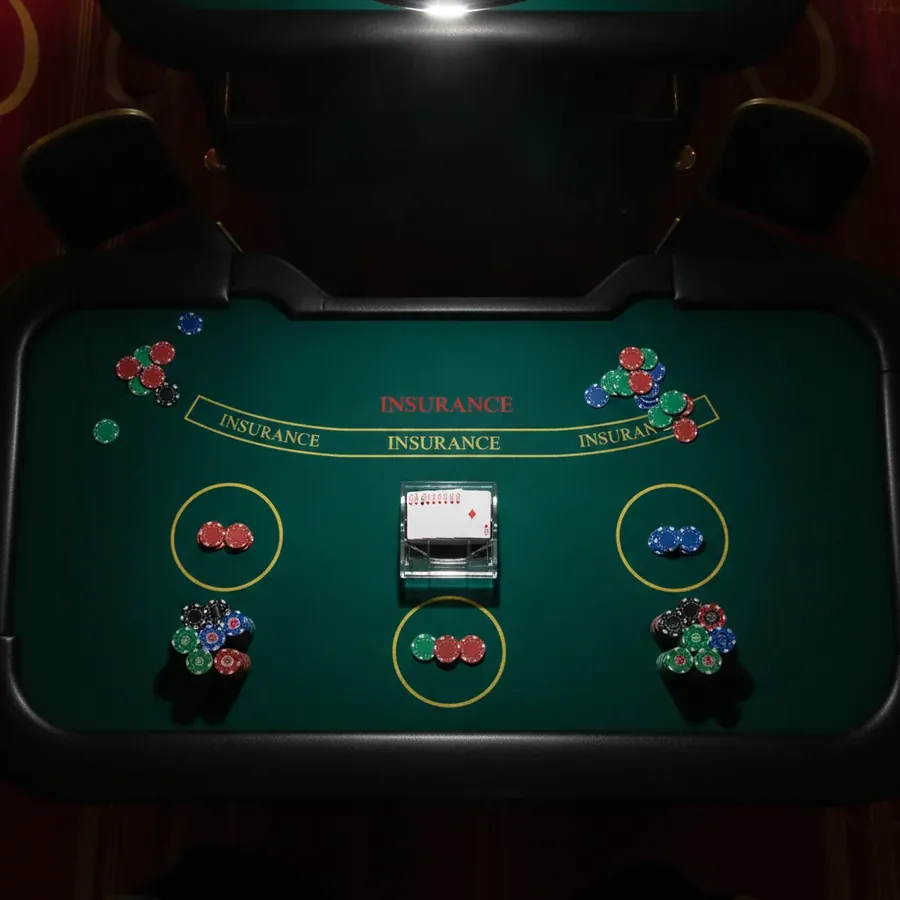
How long do 100 EUR last at a 1 EUR table?
At a blackjack table with a minimum bet of 1 EUR, a bankroll of 100 EUR provides exactly one hundred initial betting units before any outcome occurs. The duration of play depends heavily on the volatility and the specific house edge applied to the chosen rule set. Conservative play using basic strategy extends longevity, while aggressive side bets deplete funds much faster due to higher variance.
Infinite Blackjack hosted by Evolution requires stakes ranging from 1 to 5,000 EUR, allowing players to utilize small unit sizes within the 100 EUR budget. With an RTP of 99.47%, the theoretical loss rate is minimal per hand, but actual results fluctuate around this mean. A player might experience several winning streaks that temporarily increase the bankroll beyond the starting limit.
Blackjack Party imposes a minimum stake of 1.00 EUR and a maximum of 1,000 EUR, accommodating smaller budgets effectively. The presence of two moderators adds entertainment value but does not alter the underlying mathematics of the game. Players should monitor their balance closely, as a losing streak of twenty hands would consume 20% of the total capital available.
Place Side Bet before cards are dealt
Side bets such as Any Pair, 21+3, Hot 3, and Bust It are available at Infinite Blackjack tables provided by Evolution. These wagers are placed separately from the main hand before the initial cards are distributed to all participants. They offer independent payout structures based on specific card combinations rather than the final hand total.
Lightning Blackjack introduces lightning multipliers up to 25x on winning hands, adding a layer of volatility to the standard side bet options. The minimum bet for this variant starts at 1 EUR, making it accessible for casual players seeking high-risk opportunities. These multipliers apply to both the main game and selected side bets if the conditions are met during the deal.
Insurance represents another form of side wagering, paying out at 2:1 odds when the dealer shows an ace. This bet carries a substantial house edge of 7.47% and an RTP of only 92.53% for games using six to eight decks. Basic strategy dictates rejecting this option unless the player employs advanced counting techniques with a true count of +3 or higher.
No Double Down on three cards
Standard liberal rules often permit doubling down on any two cards, whereas some restricted variants prohibit doubling on three-card hands. This limitation reduces the player's ability to capitalize on strong starting totals like 11 against a weak dealer upcard. The inability to double increases the house edge by removing a key strategic tool for maximizing returns.
Games offering double after split allow players to double their initial stake again if they split a pair and receive one additional card each. This feature improves the RTP by approximately 0.14 percentage points compared to restrictions forbidding post-split doubles. Absence of this rule forces players to rely solely on hitting or standing, potentially leading to suboptimal decisions.
Resplitting aces is frequently paired with double-down restrictions, though it offers a slight benefit of improving RTP by 0.08 percentage points. However, this gain is negligible compared to the losses incurred by limiting doubling opportunities on larger totals. Players analyzing the rule matrix must weigh minor improvements against significant structural disadvantages in betting flexibility.
Live Table vs RNG Table: Speed and Limits
RNG blackjack games typically operate at a faster pace than live dealer tables, allowing for more hands per hour due to automated dealing. Infinite Blackjack from Evolution supports unlimited seats but maintains a physical dealing speed that limits transaction volume per minute. This difference affects how quickly a fixed bankroll, such as 100 EUR, is consumed or augmented over time.
Bet limits vary significantly between platforms, with Lightning Blackjack capping stakes at 2,500 EUR while Infinite Blackjack goes up to 5,000 EUR. RNG versions may offer wider ranges or lower minimums depending on the software provider's configuration. High-limit players require tables that accommodate large unit sizes without restricting access through low caps.
Bonus wagering contributions differ by game type, with table games contributing only 10% toward turnover requirements compared to 100% for slots. Playing live blackjack or RNG variants slows bonus clearance progress substantially, requiring larger deposits to meet the same turnover targets. Players claiming the 300% welcome bonus up to €2,000 must factor in this reduced contribution rate when planning their gameplay strategy.
Blackjack variants at a glance
| Variant | Payout | House edge | Rule | Bet range |
|---|---|---|---|---|
| Blackjack Liberal Vegas Strip (liberale Regeln, 3:2) | 99.72% | 0.28% | Günstigste Regelkombination: S17 + DAS + Resplit + Late Surrender. Standardabweichung 1,15 | Blackjack 3:2, Gewinn 1:1 |
| Blackjack Surrender (Late Surrender) – Regel-Effekt | n.a. (Regel-Modifikator) | −0.08 Prozentpunkte | Spieler gibt Hand nach Dealer-Blackjack-Prüfung auf, verliert die Hälfte des Einsatzes. Verbessert RTP um ca. 0.08 Prozentpunkte. Early Surrender ist wesentlich wertvoller (bis −0.6 Prozentpunkte), aber extrem selten. | Rückzahlung 50% des Einsatzes |
| Blackjack Ein Deck, klassische Regeln, 3:2 | 99.85% | 0.15% | Weniger Decks = niedrigerer Vorteil; ein Deck gibt ca. −0.48 Prozentpunkte gegenüber 8 Decks. Oft durch 6:5 Auszahlung kompensiert. | Blackjack 3:2, Gewinn 1:1 |
| Blackjack 6 Decks, S17, DAS, DOA, Auszahlung 3:2, Basisstrategie | 99.54% | 0.46% | Dealer steht auf Soft 17; Verdopplung auf jeder Zweierkarte; Verdopplung nach Split erlaubt; keine Aufgabe. Basisstrategie ist für diesen Wert zwingend | Blackjack 3:2, normaler Gewinn 1:1, Insurance 2:1 |
| Blackjack Insurance / Versicherung (6–8 Decks) | 92.53% | 7.47% | Separate Nebenwette bis 50% der Hauptwette, wenn der Dealer ein Ass hat. Basisstrategie schreibt IMMER Ablehnung vor (außer Karten zählen bei True Count ≥ +3). Bei einem Deck Vorteil ≈ 5.88% | Insurance 2:1 |
| Blackjack Auszahlung 6:5 statt 3:2 (6 Decks) | 98.15% | 1.85% | Ersatz von 3:2 durch 6:5 fügt exakt +1.39 Prozentpunkte zum Vorteil des Casinos hinzu – stärker als jede andere Regeländerung. Bei $10 Einsatz zahlt Blackjack $12 statt $15. | Blackjack 6:5, Gewinn 1:1 |
Bust at 22: Stake Lost Immediately
The Infinite Blackjack table enforces a strict bust rule where any hand totaling 22 or higher results in an immediate loss, contrasting with standard rules that bust at 21. This specific mechanic increases the house edge significantly for players who do not adjust their basic strategy accordingly. The minimum stake of 1 EUR and maximum of 5,000 EUR remain valid under this constraint. Players must calculate probabilities carefully to avoid losing their entire wager on a marginal total.
Lightning Blackjack applies the same automatic loss condition for hands reaching 22 or more, regardless of the Lightning multipliers applied to winning hands. The presence of multipliers up to 25x does not override the fundamental rule that a 22 is a losing outcome. The RTP of 99.56% accounts for these specific payout structures and loss conditions. Consequently, the potential for high returns is capped by the immediate forfeiture of the stake upon busting.
Blackjack Party utilizes the identical bust threshold, ensuring consistency across Evolution's live dealer portfolio. With two moderators managing the pace, the risk of misinterpreting the 22 limit is minimized through clear visual cues. The betting range of 1.00 to 1,000 EUR allows for varied stake levels within this rigid framework. Understanding this rule is essential for managing bankroll effectively during high-variance sessions.
Ace Split: only one card per hand
Resplit Aces (RSA) improves the Return to Player by 0.08 percentage points compared to stricter splitting rules. However, most tables restrict this benefit by allowing only one additional card to be drawn on each split Ace. This limitation reduces the strategic value of splitting aces compared to scenarios where multiple hits are permitted. The base RTP of 99.54% assumes standard restrictions unless specified otherwise.
The House Edge of 0.46% for the 6-deck variant incorporates the penalty associated with limited ace splits. Allowing resplits on non-ace cards contributes an additional 0.14 percentage point improvement to the player's odds. This distinction highlights the importance of checking specific table rules before playing. Players seeking optimal conditions should prioritize tables offering full resplit privileges.
Infinite Blackjack maintains the one-card restriction on split aces while offering unlimited seating positions. The 99.47% RTP reflects these standard constraints alongside other liberal rules like Double After Split. Players can leverage the low house edge by adhering strictly to basic strategy. The maximum bet of 5,000 EUR provides ample opportunity to capitalize on favorable odds within these limits.
Blackjack Payout 3:2 Explained in Detail
A natural blackjack paying 3:2 returns 150 EUR for every 100 EUR wagered, establishing the baseline for favorable odds. This payout structure supports the low house edge of 0.46% found in standard 6-deck games. Altering this ratio to 6:5 drastically changes the expected value for the player. The difference between these two payment models is critical for long-term profitability.
Switching from a 3:2 to a 6:5 payout adds exactly 1.39 percentage points to the house advantage. This increase raises the overall house edge to 1.85%, making the game significantly less profitable. For a 10 EUR bet, the payout drops from 15 EUR to 12 EUR, illustrating the direct financial impact. Such a change outweighs the benefits of other minor rule adjustments.
Liberal Vegas Strip rules combine the 3:2 payout with S17 and DAS to achieve an impressive 99.72% RTP. This configuration represents the most advantageous environment for skilled players utilizing basic strategy. The standard deviation of 1.15 indicates moderate volatility relative to the return rate. Maintaining this payout ratio is essential for preserving the mathematical edge over the casino.
Mobile version needs 1 Mbit bandwidth
The mobile interface requires a minimum internet connection speed of 1 Mbit per second to function correctly. This bandwidth ensures stable communication with the server hosting the live dealer tables. Insufficient speeds may result in delayed video streams or disconnections during active gameplay. Users should verify their network capacity before attempting to join a session.
Live tables such as Infinite Blackjack demand consistent data throughput to maintain real-time interaction quality. The 99.47% RTP calculation assumes uninterrupted access to the game feed. Network instability can disrupt the ability to place bets or view card outcomes accurately. A stable connection is therefore a prerequisite for participating in high-stakes environments.
Blackjack Party operates similarly, requiring reliable connectivity to handle the interactive elements managed by two moderators. The 1.00 to 1,000 EUR betting range remains accessible provided the bandwidth threshold is met. Data usage accumulates based on stream duration and resolution settings. Players should monitor their consumption to avoid exceeding mobile data limits.
When can you increase your bet?
Players may increase their wager immediately after completing all actions on a resolved hand, including hitting, standing, or doubling down. This flexibility allows for dynamic bankroll management throughout the session. The transition between hands occurs without delay in infinite formats like Infinite Blackjack. Resolving the current bet is the sole trigger for adjusting the stake size.
Side bets such as Any Pair or 21+3 require separate placement before the initial deal and cannot be increased mid-hand. These wagers are independent of the main game progression and follow distinct timing rules. The four available side options in Infinite Blackjack must be sized according to the player's pre-deal strategy. Adjustments are only possible for new rounds, not existing ones.
Insurance bets become available only when the dealer exposes an Ace as their upcard, occurring once per hand cycle. This optional wager costs 50% of the original stake and pays 2:1 if the dealer has blackjack. It is generally advised against due to the 7.47% house edge associated with this specific bet. Increasing exposure here requires careful consideration of the dealer's hole card probability.
Check table limit before the first bet
The Infinite Blackjack variant sets a betting range from 1 to 5,000 EUR, accommodating high-volume players seeking maximum flexibility at Evolution tables. This upper threshold is five times higher than the Lightning Blackjack limit of 2,500 EUR and exactly five times the 1,000 EUR cap for the Party variant. Players must verify their bankroll matches the specific table rules to avoid rejection during the wagering process.
Infinite Blackjack allows an unlimited number of participants at each virtual seat, ensuring that even large bets do not exclude other users from the game. The 1 EUR minimum entry point aligns with the standard low-stakes expectations for casual play, contrasting sharply with the exclusive nature of high-roller rooms. This structure supports diverse betting strategies without forcing players into uncomfortable financial commitments.
The Party variant restricts wagers between 1.00 and 1,000 EUR, creating a distinct boundary for mid-range gamblers who prefer a lively atmosphere over extreme limits. The presence of two moderators adds a social layer that does not affect the mathematical RTP of 99.47% but influences the perceived speed of the session. Understanding these caps prevents accidental disqualification when attempting to place larger side bets.
Bet two percent of bankroll per hand
Applying a strict two percent rule to a hypothetical 1,000 EUR bankroll results in a precise 20 EUR wager per hand, minimizing exposure to variance during the session. This conservative approach contrasts with aggressive strategies that might risk ten percent or more, which would deplete funds significantly faster against the house edge. Maintaining this ratio ensures longevity and allows for statistical recovery over thousands of hands.
The Liberal Vegas Strip variant boasts a minimal house edge of only 0.28%, making it ideal for low-variance betting systems that rely on small, consistent stakes. With a standard deviation of 1.15, the volatility remains manageable for players adhering to the two percent guideline, reducing the likelihood of rapid bankroll erosion. This mathematical stability supports disciplined money management across extended playing periods.
Conversely, the Insurance side bet carries a severe house edge of 7.47%, drastically undermining any attempt to preserve capital through careful base-game wagering. Accepting insurance on a 20 EUR main bet risks losing an additional 10 EUR (50% of the stake) with negative expected value unless counting cards at a true count of +3 or higher. Avoiding this pitfall is essential for maintaining the integrity of the two percent strategy.
Highroller from 500 EUR per hand
Players seeking high-stakes action can access Infinite Blackjack with maximum bets reaching 5,000 EUR, providing substantial opportunities for significant payouts within a single round. This limit is double the 2,500 EUR ceiling found at Lightning Blackjack, offering greater flexibility for those willing to risk larger sums for potential multipliers up to 25x. Such limits cater specifically to individuals managing substantial gaming budgets.
The Party variant caps wagers at 1,000 EUR, which is half the maximum allowed at Lightning Blackjack but still sufficient for serious high-roller engagements. The atmospheric elements provided by the dual moderators enhance the experience without altering the underlying mathematics or payout structures. High rollers must ensure their preferred environment aligns with their desired level of interaction versus pure gameplay.
A 500 EUR bet represents half the maximum limit at both Infinite and Party tables, allowing for two consecutive full-limit plays if necessary. This midpoint serves as a practical benchmark for assessing risk tolerance, balancing the desire for high rewards against the statistical inevitability of the house edge. Careful monitoring of bankroll depletion is critical when operating near these upper thresholds.
Double Down after Split: which tables allow it
The Blackjack Liberal Vegas Strip variant explicitly permits Double After Split (DAS), a rule that improves the player's return by approximately 0.14 percentage points compared to restricted versions. This feature allows splitting a pair and then doubling down on each new hand, maximizing profit potential in favorable dealer-up-card scenarios. It contributes to the variant's superior RTP of 99.72% alongside other liberal rules like S17.
Standard configurations often restrict doubling to the initial two cards only, denying the strategic advantage of DAS entirely and increasing the house edge. Variants lacking DAS typically show lower RTP values due to the loss of this specific maneuver option during split hands. Players should verify rule sets carefully, as the absence of DAS significantly impacts long-term profitability.
The 6-deck S17 configuration also allows DAS, contributing to its 0.46% house edge when combined with surrender options and perfect basic strategy application. This consistency across different deck counts demonstrates that DAS availability is a key determinant of favorable odds rather than just deck composition. Utilizing DAS correctly can shift the balance slightly in the player's favor over thousands of decisions.
How much time is left for the decision?
Evolution's live dealer games operate with real-time pacing, where dealers manage multiple hands simultaneously without explicit timer displays visible to the player interface. The absence of a countdown clock places the responsibility on the player to recognize natural pauses in the deal sequence, such as after card distribution. Delayed responses may result in automatic actions based on pre-set default choices defined by the table rules.
Infinite Blackjack features unlimited seats, which can introduce slight delays as the system processes bets from all active participants before revealing the dealer's hole card. This structural complexity requires players to act promptly once the betting window closes to avoid disrupting the flow for others. The 99.47% RTP assumes optimal timing and adherence to basic strategy without hesitation.
Lightning Blackjack introduces random multiplier events that do not alter the fundamental decision-making timeframe but add excitement to each round. Players must decide whether to accept or decline insurance before the dealer checks for blackjack, a process governed by the physical pace of the studio. Efficient play minimizes downtime and maximizes the number of hands completed per hour, enhancing overall engagement.
Contact
Live - online chat
Banking









Providers










Amunra Casino 2026